



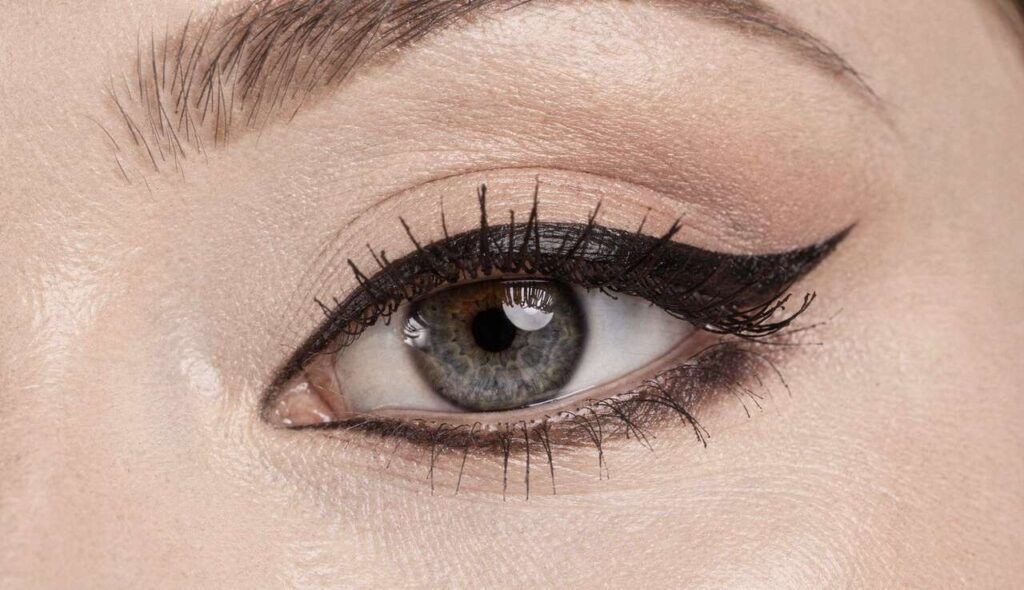
Hooded eyelids present unique challenges when applying eye makeup, often causing mascara to smudge and eyeliner to disappear into the crease. Professional makeup artists have developed specialised techniques to work with this eye shape, transforming potential obstacles into opportunities for stunning looks. Whether you were born with hooded lids or they’ve developed over time, mastering the right application methods can dramatically enhance your eye makeup game.
Understanding hooded eyelids
What defines hooded eyelids
Hooded eyelids occur when the skin from the brow bone drapes over the crease, creating a smaller visible lid space when the eyes are open. This eye shape can be genetic or develop naturally with age as skin loses elasticity. The key characteristic is that the mobile eyelid space becomes partially or completely hidden beneath the upper eyelid fold.
Common challenges with hooded eyes
Those with hooded eyelids frequently encounter specific makeup difficulties:
- Mascara transferring onto the upper lid throughout the day
- Eyeliner disappearing when eyes are open
- Eyeshadow creasing more readily
- Reduced visible lid space for creative looks
- Makeup appearing smudged after just hours of wear
Understanding these challenges allows you to select appropriate products and techniques. The natural anatomy of hooded eyes means the skin comes into contact with freshly applied makeup more frequently than other eye shapes, requiring waterproof formulas and strategic placement.
Recognising your eye shape is the first step towards achieving flawless makeup application, which leads naturally to selecting products specifically formulated to address these concerns.
Choosing the right mascara for hooded eyelids
Waterproof versus tubing formulas
For hooded eyelids, formula selection is absolutely crucial for preventing transfer. Professional makeup artists overwhelmingly recommend two types:
| Formula Type | Benefits | Best For |
|---|---|---|
| Waterproof | Smudge-proof, long-lasting | All-day wear, humid conditions |
| Tubing | Creates polymer tubes around lashes, easy removal | Sensitive eyes, minimal transfer |
Tubing mascaras work particularly well because they encapsulate each lash in a water-resistant polymer that won’t budge until removed with warm water and gentle pressure. Unlike traditional formulas that can flake or smudge, tubing mascaras maintain their integrity throughout the day.
Avoiding heavy, wet formulas
Heavy mascaras with thick, creamy consistencies spell disaster for hooded lids. These formulas take longer to dry and remain tacky, increasing the likelihood of transfer. Instead, opt for quick-drying formulas with buildable coverage. Apply thin coats, allowing each layer to dry completely before adding more volume.
Once you’ve selected the appropriate formula, proper application technique becomes essential for maximising results.
Mascara application techniques
The strategic wiggle method
Professional makeup artists employ a specific technique for hooded eyes. Start at the lash base and wiggle the wand from side to side whilst pulling upwards. This deposits more product at the roots, creating lift and preventing lashes from drooping onto the lid.
Focusing on the outer lashes
Rather than applying equal amounts across all lashes, concentrate product on the outer corners. This creates an eye-opening effect that draws attention outwards and upwards. Apply multiple coats to outer lashes whilst keeping inner lashes lighter to prevent them from touching the inner lid area.
The crucial drying period
After application, keep your eyes wide open for 30 to 60 seconds. This simple step allows the mascara to set completely before the lid skin makes contact. Many people skip this step, resulting in immediate transfer. Consider using a small fan or simply looking upwards whilst the formula dries.
Lower lash application
For lower lashes, use a minimal amount of product. Hold a tissue or cotton pad beneath the lower lashes during application to catch any excess. Use the tip of the wand rather than the full brush for precise, controlled application that won’t create shadows or smudges beneath the eye.
Whilst mascara defines the lashes, strategic eyeliner placement can further enhance hooded eyes.
Using eyeliner to enhance the eyes
Mapping the visible lid space
Before applying eyeliner, open your eyes and identify the visible lid area. Use a mirror at eye level rather than looking down, as this shows exactly what others see. Mark this visible space mentally, as any liner placed above this point will disappear when your eyes are open.
The tightline technique
Tightlining involves applying liner to the upper waterline, directly between the lashes. This technique creates the illusion of fuller lashes without taking up precious lid space. Use a waterproof gel or pencil liner, gently lifting the lid and working the product into the lash roots.
Creating a modified wing
Traditional winged liner often fails on hooded eyes because the wing gets cut off by the fold. Instead, create a modified wing:
- Draw the wing whilst eyes are open, following the natural eye shape
- Keep the wing thin and angled upwards rather than outwards
- Connect the wing to a thin line along the lashes
- Avoid thick lines that consume visible lid space
- Consider a soft, smudged wing rather than sharp lines
Powder setting method
After applying eyeliner, professional artists set it with a matching eyeshadow powder. Using an angled brush, press powder over the liner to lock it in place and prevent transfer to the upper lid. This extra step significantly extends wear time.
Even with perfect technique, certain common errors can undermine your efforts.
Avoiding common mistakes
Applying makeup with eyes closed
The most frequent mistake involves applying all eye makeup with closed eyes. This approach doesn’t account for how the makeup appears when eyes are open. Always check your work with eyes open at eye level to ensure liner and shadow placement works with your eye shape rather than against it.
Using the wrong primer
Skipping eye primer or using face primer on lids creates a slippery base that encourages creasing and transfer. Invest in a dedicated eye primer formulated to grip powder products and create a dry, matte base. Apply sparingly and allow it to set for one minute before proceeding with makeup.
Overloading the inner corner
Heavy product application near the inner corner of hooded eyes almost guarantees smudging. This area experiences the most contact between upper and lower lid. Keep this zone minimal:
- Use lighter colours in the inner corner
- Apply minimal mascara to inner lashes
- Avoid dark liner in the inner third of the eye
- Consider leaving the inner waterline bare
Neglecting setting spray
After completing your eye makeup, a targeted application of setting spray adds an extra protective layer. Hold the bottle at arm’s length and mist lightly, allowing the product to dry with eyes open. This creates a barrier against oil and moisture that cause breakdown.
Beyond basic technique, professional makeup artists employ additional strategies for maximising longevity.
Professional makeup artist tips for long-lasting wear
The powder sandwich technique
Professional artists often use a powder sandwich method for hooded eyes. Apply eye primer, dust with translucent powder, add eyeshadow, then seal with setting spray. This creates multiple barriers against creasing and transfer, with each layer reinforcing the others.
Strategic touch-up preparation
Rather than attempting to fix smudged makeup, prevent it entirely by carrying specific items:
- Cotton buds for precise cleanup
- Translucent powder for mattifying
- A small angled brush for reapplication
- Waterproof liner for quick touch-ups
The blotting paper method
Throughout the day, excess oil on the eyelid contributes to makeup breakdown. Professional artists recommend gently blotting the lid area every few hours with oil-absorbing papers, followed by a light dusting of translucent powder. This maintains the dry base essential for preventing transfer.
Temperature considerations
Makeup artists working in various climates adjust their techniques accordingly. In humid or warm conditions, they use extra-strength waterproof formulas and increase setting powder application. They also recommend allowing makeup to set for longer periods before fully opening eyes.
Hooded eyelids require adapted techniques rather than standard application methods, but with the right products and professional strategies, achieving long-lasting, beautiful eye makeup becomes entirely achievable. The key lies in understanding your eye shape, selecting appropriate waterproof or tubing formulas, and applying products strategically to visible areas. Focus on tightlining, modified wings, and proper drying time for mascara to prevent transfer. Avoid common pitfalls such as applying makeup with closed eyes or neglecting primer, and incorporate professional tricks like the powder sandwich technique and strategic blotting. These expert approaches transform hooded eyelids from a makeup challenge into an opportunity for stunning, enduring eye looks.