


The bow has long been associated with femininity, grace and a certain playful elegance that transcends fleeting trends. From the delicate ribbons adorning Victorian gowns to the bold statement pieces gracing contemporary runways, this timeless accessory continues to captivate fashion enthusiasts worldwide. As we approach a new era of sartorial expression, the bow emerges as a defining symbol of refined style, blending nostalgia with modern sophistication. Its versatility allows it to adapt seamlessly across various aesthetics, from minimalist chic to maximalist extravagance, making it an essential element for those seeking to elevate their wardrobe with understated charm.
The renaissance of the bow in modern fashion
Historical roots and contemporary revival
The bow’s journey through fashion history reveals a remarkable resilience that few accessories can claim. Originating in the ornate courts of European aristocracy, bows served as markers of social status and refined taste. During the Rococo period, elaborate ribbon work adorned everything from shoes to hairstyles, whilst the Victorian era saw bows become synonymous with modesty and feminine virtue. The twentieth century witnessed fluctuating popularity, with the bow experiencing peaks during the 1950s alongside Christian Dior’s New Look and again in the 1980s power-dressing era.
Today’s resurgence reflects a broader cultural shift towards romantic aesthetics and nostalgic references. Contemporary designers have reimagined the bow not merely as decoration but as a central architectural element, transforming it into sculptural forms that challenge traditional notions of femininity. This revival coincides with a growing appreciation for craftsmanship and detail in fashion, as consumers increasingly seek pieces that tell a story beyond mere functionality.
Cultural significance in the digital age
Social media platforms have amplified the bow’s visibility, with influencers and celebrities showcasing innovative styling approaches. The bow-core aesthetic has gained substantial traction on visual platforms, where users curate feeds celebrating this motif in various contexts. This digital proliferation has democratised access to bow-centric fashion, inspiring individuals across different demographics to experiment with this symbol. The bow’s photogenic quality makes it particularly suited to contemporary visual culture, where distinctive details capture attention in crowded feeds.
Understanding this historical and cultural context provides essential groundwork for exploring practical applications of the bow in everyday styling choices.
How to incorporate the bow into your daily wardrobe
Starting with subtle accents
For those new to bow-adorned fashion, beginning with understated pieces offers a comfortable entry point. Consider these approachable options:
- Ballet flats or slingback shoes featuring small bow details at the heel or toe
- Handbags with discreet bow closures or strap embellishments
- Silk scarves that can be tied into bow shapes around the neck or wrist
- Hair accessories such as clips, headbands or scrunchies with integrated bows
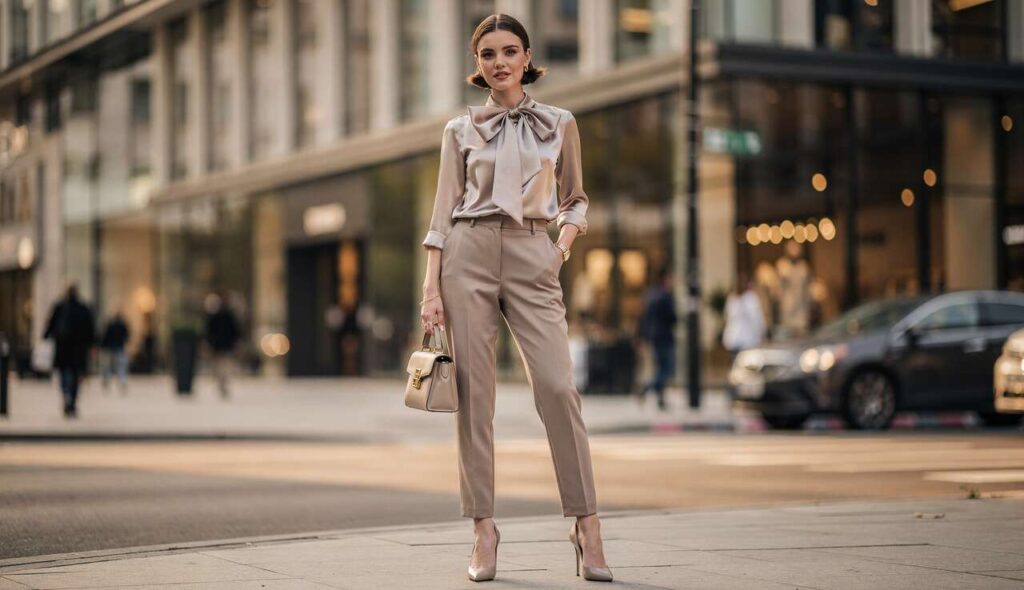
- Blouses with modest bow neckties that can be styled loosely or formally
These subtle introductions allow experimentation without overwhelming your existing aesthetic. The key lies in selecting proportions appropriate to your frame and comfort level, ensuring the bow enhances rather than dominates your overall appearance.
Making bold statements
Once comfortable with smaller accents, consider incorporating statement bow pieces that serve as focal points. Oversized bows positioned at the waist, shoulder or back create dramatic silhouettes suitable for special occasions or fashion-forward daily wear. Dresses with exaggerated bow detailing transform simple cuts into memorable ensembles, whilst coats featuring bow closures offer functional elegance during cooler months.
The strategic placement of bows can also address styling objectives such as defining the waistline, drawing attention to specific features or creating visual interest in monochromatic outfits. Layering techniques allow further creativity: pairing a bow-detailed blouse beneath a structured blazer creates depth whilst maintaining professional appropriateness.
Mixing textures and contexts
Contemporary bow styling thrives on unexpected juxtapositions. Combining delicate bow elements with traditionally masculine pieces creates compelling contrasts: imagine silk bow blouses paired with tailored trousers and brogues, or leather jackets adorned with ribbon details. This approach challenges conventional associations whilst demonstrating sophisticated styling sensibility.
Having established practical integration methods, examining the designers shaping this trend provides valuable insight into its evolution and future direction.
Key designers redefining the bow
Luxury houses embracing the motif
Valentino has positioned bows as a signature element under creative direction that emphasises romantic femininity. Their recent collections feature oversized bows in luxurious fabrics, often serving as the centrepiece of otherwise minimalist designs. The Italian house demonstrates how traditional symbols can be reinterpreted through contemporary lenses without losing their essential character.
Simone Rocha approaches the bow through a distinctly poetic perspective, incorporating ribbons and bows into pieces that blur boundaries between strength and delicacy. Her designs often feature bows in unexpected materials such as leather or structured organza, creating textural complexity that elevates the motif beyond mere decoration.
Emerging talents and independent labels
Beyond established luxury brands, numerous independent designers have built identities around bow aesthetics. These creators often emphasise artisanal techniques and limited production runs, appealing to consumers seeking unique pieces with traceable origins. Their work demonstrates the bow’s adaptability across price points and design philosophies, from avant-garde experimentation to wearable everyday pieces.
British designers particularly have embraced the bow’s heritage connections whilst infusing contemporary irreverence. This approach resonates with audiences appreciating both tradition and innovation, creating a bridge between fashion’s past and future.
The diversity of designer interpretations naturally leads to questions about the materials and construction methods that bring these visions to life.
Popular materials and styles of bows
Fabric choices and their implications
Material selection profoundly influences a bow’s character and versatility. The following table illustrates common options and their typical applications:
| Material | Characteristics | Best suited for |
|---|---|---|
| Silk satin | Luxurious sheen, fluid drape | Evening wear, formal occasions |
| Grosgrain ribbon | Structured texture, holds shape | Hair accessories, tailored pieces |
| Velvet | Rich texture, seasonal appeal | Autumn/winter garments, vintage aesthetics |
| Leather | Edgy contrast, durability | Contemporary casual wear, accessories |
| Organza | Transparent lightness, volume | Romantic styles, layered effects |
Each material carries distinct associations and practical considerations. Silk bows convey elegance but require careful maintenance, whilst leather alternatives offer longevity and modern edge. Understanding these properties enables informed selection aligned with lifestyle needs and aesthetic preferences.
Structural variations and proportions
Beyond material, bow styles vary considerably in construction. The classic butterfly bow features symmetrical loops and remains the most recognisable form. Asymmetrical bows introduce contemporary dynamism, with uneven loops or trailing ribbons creating movement and visual interest. Flat bows lie close to the garment surface, offering subtle texture without bulk, whilst three-dimensional sculptural bows make bold architectural statements.
Proportional considerations prove equally important. Petite frames typically benefit from smaller, more delicate bows that complement rather than overwhelm, whereas taller individuals can carry larger statement pieces effectively. Context matters significantly: workplace environments generally favour restrained bow details, whilst social occasions permit more expressive interpretations.
With this understanding of materials and construction, attention turns to selecting appropriate bow pieces for specific contexts and events.
Tips for choosing the perfect bow according to the occasion
Professional environments
Incorporating bows into workplace attire requires strategic restraint and awareness of organisational culture. Conservative professional settings call for modest bow details that enhance rather than distract. Consider these approaches:
- Blouses with small bow neckties in neutral colours that can be styled discreetly
- Shoes featuring minimal bow accents in classic materials
- Structured handbags with understated bow closures
- Tailored dresses where bows serve functional purposes such as belt details
The objective involves demonstrating personal style whilst maintaining professional credibility. Bows in these contexts should appear polished and intentional rather than frivolous or attention-seeking.
Social and celebratory occasions
Evening events and celebrations offer greater freedom for expressive bow styling. Cocktail attire accommodates dramatic bow placements such as shoulder details, back embellishments or waist-defining statements. Wedding guest attire particularly suits romantic bow elements, though avoiding white or cream bows prevents inadvertently competing with bridal aesthetics.
Seasonal considerations influence appropriateness: velvet bows align beautifully with winter celebrations, whilst lightweight silk or organza versions suit spring and summer gatherings. Coordinating bow colour and style with the event’s formality level demonstrates sophisticated styling awareness.
Casual everyday styling
Daily wear benefits from comfortable, practical bow integration that withstands regular activity. Hair accessories provide effortless incorporation, whilst casual footwear with bow details adds personality to relaxed outfits. Knitwear featuring bow embellishments offers cosy charm during cooler months, and denim pieces with ribbon accents bridge casual and feminine aesthetics effectively.
The key to successful everyday bow styling lies in ensuring pieces align with actual lifestyle demands rather than purely aesthetic aspirations. Functionality and comfort should never be sacrificed for trend adherence.
Beyond personal styling considerations, broader questions emerge regarding the bow trend’s implications for fashion production and environmental responsibility.
Sustainability and trend: the impact of the bow on the textile industry
Production considerations and material sourcing
The bow’s resurgence raises important questions about sustainable fashion practices. Traditional bow construction often involves silk production, which carries environmental implications ranging from water usage to chemical treatments. However, innovative alternatives are emerging, including organic silk production methods and plant-based ribbon materials that reduce ecological footprints.
Many conscious brands now prioritise deadstock fabrics for bow embellishments, utilising surplus materials that would otherwise contribute to waste streams. This approach demonstrates how trend-driven details can align with circular economy principles when implemented thoughtfully.
Longevity versus fast fashion
The bow’s enduring appeal presents opportunities for investment purchasing rather than disposable trend consumption. Classic bow pieces in quality materials transcend seasonal fluctuations, offering years of wear when properly maintained. This longevity directly counters fast fashion’s problematic cycle of rapid production and disposal.
Consumers can support sustainability by selecting versatile bow pieces that integrate across multiple outfits and occasions, maximising cost-per-wear whilst minimising environmental impact. Choosing timeless designs over extreme trend interpretations ensures pieces remain relevant beyond immediate fashion cycles.
Industry innovation and future directions
Forward-thinking manufacturers are exploring technological innovations that reduce the bow’s environmental footprint. Digital printing techniques allow precise ribbon production with minimal waste, whilst biodegradable materials offer end-of-life solutions that prevent landfill accumulation. Some designers experiment with modular bow accessories that attach to multiple garments, promoting versatility and reducing overall consumption.
The bow trend thus represents both challenge and opportunity for sustainable fashion advancement. Its popularity can drive demand for responsible production methods, potentially influencing broader industry practices beyond this specific motif.
The bow’s enduring presence in fashion reflects its unique ability to convey elegance, playfulness and sophistication simultaneously. From subtle daily accents to dramatic statement pieces, this versatile motif offers endless styling possibilities across occasions and aesthetics. Leading designers continue reimagining the bow through contemporary lenses, utilising innovative materials and construction techniques that honour tradition whilst embracing modernity. As consumers increasingly prioritise both style and sustainability, the bow stands as a symbol that can bridge aesthetic aspirations with responsible fashion choices. By selecting quality pieces, understanding appropriate contexts and embracing personal creativity, individuals can harness the bow’s timeless appeal whilst contributing to more thoughtful fashion consumption patterns.