



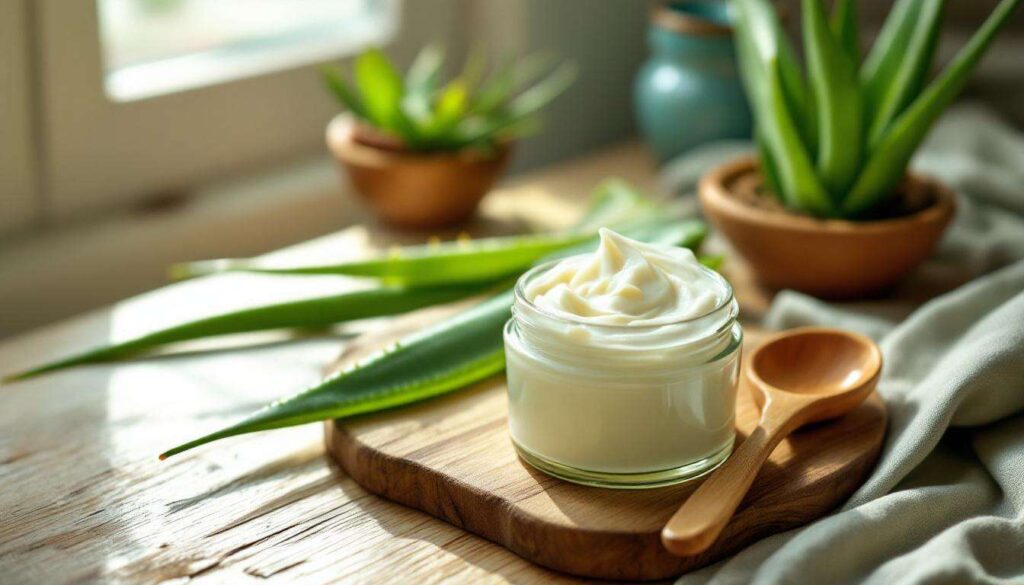
The quest for youthful, radiant skin has led many to explore natural alternatives to commercial skincare products. Among the most celebrated ingredients in natural beauty regimens, aloe vera stands out for its remarkable ability to nourish, hydrate and support the skin’s structural integrity. This succulent plant contains a wealth of vitamins, minerals and bioactive compounds that work synergistically to promote collagen synthesis, the very foundation of firm, elastic skin. Creating your own aloe vera face cream offers a cost-effective and chemical-free approach to skincare whilst harnessing the plant’s potent regenerative properties.
Why is aloe vera beneficial for the skin ?
Rich nutritional composition
Aloe vera gel contains over 75 active compounds that contribute to skin health. These include vitamins A, C and E, which act as powerful antioxidants, alongside B vitamins that support cellular metabolism. The plant also provides essential minerals such as calcium, magnesium and zinc, all crucial for maintaining skin integrity and promoting healing processes.
Hydration and moisture retention
The gel’s high water content, combined with polysaccharides, creates an effective moisture barrier on the skin’s surface. This property makes aloe vera particularly valuable for:
- Preventing transepidermal water loss
- Maintaining optimal hydration levels throughout the day
- Soothing dry, flaky skin conditions
- Balancing oil production in combination skin types
Anti-inflammatory and healing properties
Aloe vera contains compounds such as bradykinase and salicylic acid that reduce inflammation and redness. These properties prove beneficial for individuals suffering from acne, rosacea or general skin sensitivity. The gel accelerates wound healing by stimulating fibroblast activity, the cells responsible for producing collagen and other structural proteins.
Understanding these fundamental benefits reveals why aloe vera serves as an ideal base ingredient for homemade skincare formulations, particularly those targeting collagen enhancement.
How does aloe vera stimulate collagen production ?
Fibroblast activation mechanism
Research demonstrates that aloe vera gel directly influences fibroblast cells, which are responsible for synthesising collagen in the dermis. The plant’s bioactive compounds, particularly acemannan and gibberellin, trigger increased fibroblast proliferation and activity. This cellular stimulation results in enhanced collagen production, leading to improved skin firmness and reduced appearance of fine lines.
Vitamin C content and collagen synthesis
Aloe vera provides a natural source of vitamin C, an essential cofactor in collagen synthesis. Without adequate vitamin C, the body cannot properly form the triple helix structure that characterises stable collagen fibres. The vitamin C present in aloe vera works alongside other nutrients to:
- Support the hydroxylation of proline and lysine amino acids
- Stabilise collagen molecule structure
- Protect existing collagen from oxidative damage
- Enhance the overall quality of newly synthesised collagen
Antioxidant protection for existing collagen
Beyond stimulating new collagen production, aloe vera’s antioxidant compounds protect existing collagen fibres from degradation caused by free radicals and environmental stressors. This dual action of promoting synthesis whilst preventing breakdown creates an optimal environment for maintaining youthful skin structure.
| Compound | Action on collagen | Result |
|---|---|---|
| Acemannan | Stimulates fibroblasts | Increased production |
| Vitamin C | Essential cofactor | Proper synthesis |
| Polyphenols | Antioxidant protection | Prevents degradation |
With this understanding of aloe vera’s collagen-boosting mechanisms, the practical application through a homemade face cream becomes the logical next step.
Preparing an aloe vera face cream at home
Essential ingredients and their roles
Creating an effective aloe vera face cream requires selecting quality ingredients that complement the plant’s properties. The basic formulation includes:
- Pure aloe vera gel (80 ml): the active base providing collagen-stimulating compounds
- Carrier oil (20 ml): sweet almond, jojoba or rosehip oil for additional nourishment
- Beeswax (10 g): natural emulsifier that creates cream texture
- Optional essential oils (3-5 drops): lavender or frankincense for enhanced benefits
Step-by-step preparation method
The creation process requires careful attention to temperature and mixing to ensure a stable, effective product. Begin by setting up a double boiler system, which prevents overheating and preserves the beneficial compounds in your ingredients. Place the beeswax in the top container and allow it to melt completely over gentle heat.
Once the beeswax achieves a liquid consistency, gradually incorporate your chosen carrier oil whilst stirring continuously. This step ensures proper emulsification between the wax and oil phases. Remove the mixture from heat and allow it to cool slightly before adding the aloe vera gel, as excessive heat can degrade its active compounds.
Whisk the mixture vigorously until it reaches a smooth, homogeneous consistency. If incorporating essential oils, add them at this stage when the mixture has cooled to approximately room temperature. Transfer the cream to a sterilised glass container with an airtight lid.
Storage and shelf life considerations
Proper storage extends the usability of your homemade cream. Keep the container in a cool, dark location, preferably refrigerated, where it will remain effective for approximately three to four weeks. The absence of synthetic preservatives means the cream has a shorter shelf life than commercial products, but this trade-off ensures you avoid potentially harmful chemicals.
Having successfully created your aloe vera face cream, understanding the correct application technique maximises its collagen-boosting potential.
Tips for effectively applying aloe vera cream on the face
Optimal application timing
Apply the cream twice daily, morning and evening, to freshly cleansed skin. Morning application provides hydration and protection throughout the day, whilst evening application allows the active compounds to work during the skin’s natural repair cycle. The skin’s permeability increases during nighttime, making it particularly receptive to nutrient absorption.
Proper application technique
Dispense a small amount of cream, approximately the size of a pea, onto your fingertips. Warm the product between your fingers before applying, as this improves spreadability and absorption. Use gentle upward motions when massaging the cream into your face, following these guidelines:
- Start from the centre of the face and work outwards
- Use upward strokes to counteract gravitational effects
- Pay particular attention to areas prone to wrinkles
- Include the neck and décolletage in your routine
- Allow three to five minutes for complete absorption
Complementary skincare practices
Maximise the cream’s effectiveness by incorporating supportive skincare habits. Exfoliate gently twice weekly to remove dead skin cells that might impede absorption. Stay adequately hydrated by consuming sufficient water throughout the day, as internal hydration supports external skincare efforts. Protect your skin from UV damage by applying sunscreen during daytime hours, as sun exposure accelerates collagen breakdown.
Whilst aloe vera offers numerous benefits, understanding potential precautions ensures safe and effective use.
Precautions when using aloe vera
Patch testing for allergic reactions
Before applying aloe vera cream to your entire face, conduct a patch test on a small area of skin, typically the inner forearm. Apply a small amount and wait 24 hours to observe any adverse reactions. Although rare, some individuals may experience allergic responses manifesting as redness, itching or swelling.
Quality and purity considerations
The effectiveness and safety of your cream depend heavily on ingredient quality. When selecting aloe vera gel, choose products labelled as pure and organic, avoiding those containing added colours, fragrances or preservatives. If harvesting fresh aloe vera from a plant, ensure proper preparation by removing the yellow latex layer beneath the skin, which can cause irritation.
Specific contraindications
Certain conditions warrant extra caution when using aloe vera topically:
- Pregnant or breastfeeding women should consult healthcare providers
- Individuals with latex allergies may cross-react to aloe vera
- Those with extremely sensitive skin should introduce the product gradually
- Avoid application to deep wounds or severe burns without medical guidance
With proper precautions observed, consistent use of aloe vera cream delivers remarkable long-term improvements to skin health.
Long-term benefits of using aloe vera on the skin
Progressive improvement in skin texture
Regular application of aloe vera face cream produces cumulative benefits that become increasingly apparent over weeks and months. Users typically notice smoother skin texture within two to three weeks, as enhanced collagen production begins to fill in fine lines and improve overall skin plumpness. The consistent hydration provided by the cream supports the skin’s natural barrier function, resulting in a more refined, even complexion.
Enhanced elasticity and firmness
After approximately eight to twelve weeks of consistent use, the increased collagen levels manifest as noticeably firmer, more elastic skin. The skin’s ability to bounce back when gently pressed improves, indicating enhanced structural integrity. This improvement proves particularly evident in areas prone to sagging, such as the jawline and around the eyes.
Sustained protection against environmental damage
Long-term aloe vera use establishes a protective effect against environmental stressors that accelerate ageing. The antioxidant compounds accumulate in the skin, providing ongoing defence against free radical damage from pollution, UV exposure and other oxidative stressors. This protective layer helps maintain the gains achieved in collagen production and overall skin quality.
| Timeframe | Observable benefits |
|---|---|
| 2-3 weeks | Improved hydration, smoother texture |
| 6-8 weeks | Reduced fine lines, enhanced radiance |
| 12+ weeks | Increased firmness, better elasticity |
Crafting your own aloe vera face cream represents a practical, economical approach to supporting your skin’s collagen production and overall health. The process requires minimal ingredients and equipment whilst delivering results comparable to many commercial products, without the inclusion of synthetic chemicals or preservatives. By understanding the scientific mechanisms through which aloe vera stimulates collagen synthesis and following proper preparation and application techniques, you can harness this remarkable plant’s full potential. The journey towards healthier, more youthful skin begins with simple, natural ingredients and consistent care, proving that effective skincare need not be complicated or costly.