



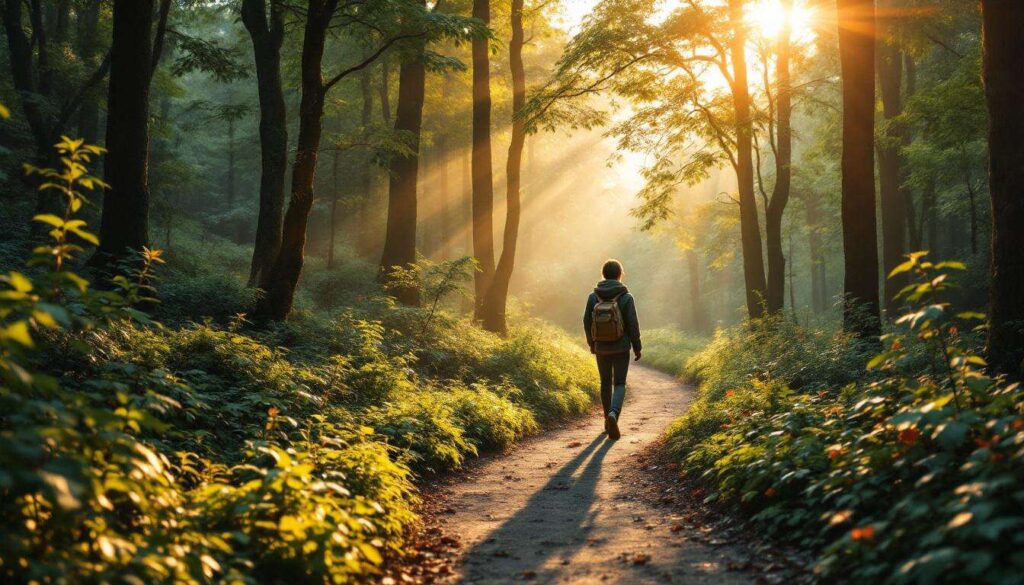
The modern urban dweller spends approximately ninety percent of their time indoors, surrounded by artificial lighting, climate-controlled environments, and digital screens. This represents a dramatic departure from the conditions under which human beings evolved over millions of years. Our ancestors lived intimately connected to natural rhythms, seasonal changes, and outdoor environments. The growing body of scientific evidence suggests that this disconnect between our evolutionary heritage and contemporary living conditions may be contributing to numerous physical and psychological challenges facing society today.
The innate human attraction to nature
Biophilia and evolutionary psychology
The concept of biophilia, introduced by biologist Edward O. Wilson, describes the inherent human tendency to seek connections with nature and other forms of life. This attraction is not merely cultural or learned behaviour but appears to be hardwired into our genetic makeup. Throughout human evolution, individuals who appreciated and understood natural environments possessed significant survival advantages, leading to the development of innate preferences for natural settings.
Research consistently demonstrates that people across diverse cultures exhibit remarkably similar preferences for certain landscape features:
- Open grasslands with scattered trees
- Proximity to water sources
- Elevated vantage points offering wide views
- Environments with moderate complexity and variety
- Settings that provide both prospect and refuge
Physiological responses to natural environments
When exposed to natural settings, human bodies exhibit measurable physiological changes that indicate stress reduction and improved wellbeing. Studies using heart rate monitors, cortisol measurements, and brain imaging reveal that even brief exposure to nature triggers beneficial responses. Blood pressure decreases, muscle tension relaxes, and stress hormone levels drop within minutes of entering green spaces.
These automatic responses suggest that our bodies recognise natural environments as inherently safe and restorative, a legacy from our evolutionary past that remains relevant despite centuries of civilisation.
The impacts of modern lifestyle on health
Physical health consequences
Contemporary urban living has introduced numerous health challenges that were virtually unknown to our ancestors. The sedentary nature of modern work, combined with processed foods and limited outdoor activity, has created an epidemic of chronic conditions:
| Health Condition | Increase Since 1980 | Primary Contributing Factors |
|---|---|---|
| Obesity | 300% | Sedentary lifestyle, processed foods |
| Type 2 Diabetes | 400% | Poor diet, lack of physical activity |
| Myopia | 250% | Reduced outdoor time, screen exposure |
| Vitamin D Deficiency | 200% | Indoor lifestyle, sun avoidance |
Mental health and psychological wellbeing
The psychological toll of disconnection from nature has become increasingly apparent. Rates of anxiety, depression, and attention disorders have risen dramatically in urbanised populations. The constant stimulation of modern life, characterised by artificial lighting, digital notifications, and noise pollution, creates a state of perpetual low-level stress that our nervous systems struggle to manage.
Research indicates that children who spend less time outdoors exhibit higher rates of behavioural problems, reduced creativity, and impaired cognitive development. Adults similarly suffer from what environmental psychologists term nature deficit disorder, experiencing reduced attention spans, increased irritability, and diminished emotional resilience.
Understanding these health impacts naturally leads to examining the biological mechanisms that make natural environments so essential to human flourishing.
Why our biology favours a natural environment
Circadian rhythms and natural light
Human biology operates according to circadian rhythms that evolved in response to natural light-dark cycles. These internal clocks regulate sleep patterns, hormone production, metabolism, and immune function. Artificial lighting, particularly the blue light emitted by screens, disrupts these fundamental biological processes, leading to sleep disorders, metabolic dysfunction, and compromised immunity.
Natural sunlight provides the full spectrum of wavelengths that our bodies require for optimal functioning, including ultraviolet light necessary for vitamin D synthesis and infrared light that supports cellular energy production.
Sensory stimulation and cognitive restoration
Natural environments provide a form of gentle, effortless attention that allows the brain’s executive functions to recover from the directed attention fatigue caused by modern life. The soft fascination of watching clouds drift, listening to birdsong, or observing patterns in leaves offers cognitive restoration without demanding focused concentration.
This contrasts sharply with urban environments, which bombard the senses with stimuli requiring constant vigilance and decision-making, depleting mental resources and contributing to psychological exhaustion.
Microbiome diversity and immune function
Exposure to diverse natural environments supports the development of a robust microbiome, the community of microorganisms living in and on our bodies. This microbial diversity plays crucial roles in immune regulation, digestion, and even mental health through the gut-brain axis.
- Soil-based organisms support immune system development
- Plant diversity correlates with gut microbiome richness
- Natural antimicrobial exposure trains immune responses
- Reduced pathogen exposure in sterile environments weakens immunity
Recognising these biological imperatives makes the case for actively seeking ways to reconnect with natural environments.
The necessary reconnection to nature
Minimum nature exposure recommendations
Research suggests that two hours per week in natural settings represents a threshold for measurable health benefits. This exposure need not occur in wilderness areas; local parks, gardens, and green corridors provide significant advantages. The quality of engagement matters as much as duration, with active participation in nature yielding greater benefits than passive observation.
Practical approaches to increasing nature contact
Reconnection requires intentional effort in modern contexts. Effective strategies include scheduling outdoor time as non-negotiable appointments, choosing active transportation routes through green spaces, and incorporating natural elements into daily routines. Even brief nature breaks during work hours demonstrate measurable improvements in concentration, creativity, and mood.
These individual efforts gain greater impact when supported by thoughtful urban planning that prioritises natural integration.
Solutions to integrate nature into urban life
Biophilic design principles
Architects and urban planners increasingly embrace biophilic design, incorporating natural elements into built environments. This approach includes maximising natural light, using natural materials, creating visual connections to outdoor spaces, and incorporating living plants into interior designs.
Green infrastructure development
Cities worldwide are implementing green infrastructure projects that provide multiple benefits:
- Vertical gardens on building facades
- Green roofs that reduce heat island effects
- Urban forests and tree-lined streets
- Pocket parks in dense neighbourhoods
- Wildlife corridors connecting green spaces
These initiatives demonstrate that urban density and nature access need not be mutually exclusive.
The future of harmonious coexistence between nature and city
Forward-thinking urban development increasingly recognises that human wellbeing depends on maintaining connections to natural systems. Emerging concepts like the fifteen-minute city, which ensures residents can access green spaces within a short walk, reflect growing awareness of nature’s essential role in healthy communities.
Technology may paradoxically support this reconnection through applications that encourage outdoor exploration, citizen science projects that engage people with local ecosystems, and virtual reality experiences that inspire appreciation for natural environments. However, these tools work best as gateways to actual nature contact rather than substitutes for authentic outdoor experiences.
The evidence overwhelmingly demonstrates that human biology remains fundamentally adapted to natural environments despite centuries of urbanisation. Physical health, mental wellbeing, and cognitive function all benefit measurably from regular nature exposure. As urban populations continue growing, prioritising green infrastructure, biophilic design, and accessible natural spaces becomes not merely desirable but essential for public health. The challenge facing contemporary society involves redesigning urban environments to honour our evolutionary heritage whilst embracing the opportunities of modern life, creating cities that support rather than suppress our innate connection to the natural world.