



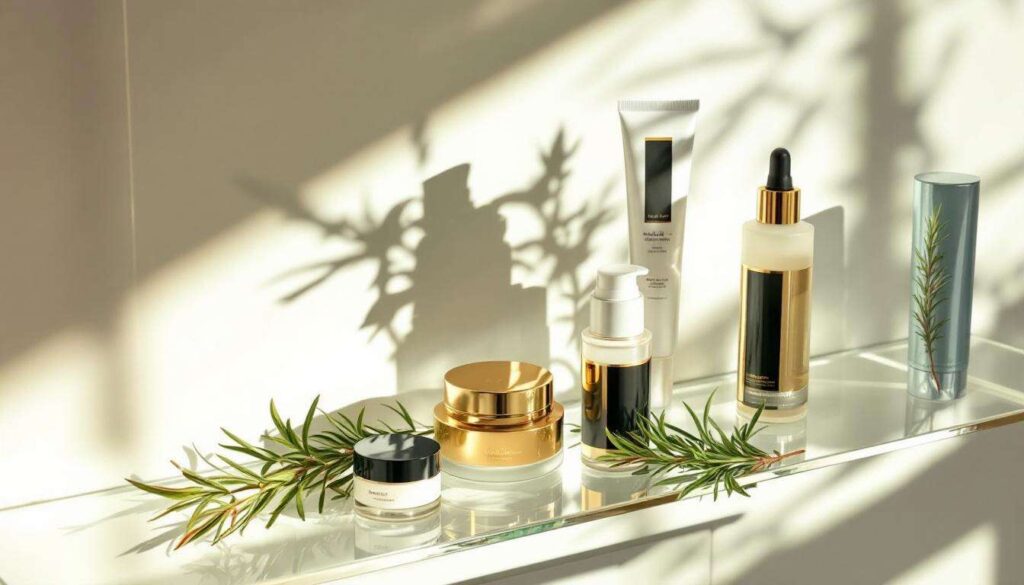
Social media platforms have become unexpected laboratories for beauty trends, with millions of users experimenting with natural remedies and sharing their results. Among the countless skincare hacks circulating online, one particular ingredient has captured widespread attention: rosemary. What began as anecdotal evidence from enthusiastic content creators has now received backing from the scientific community, transforming a viral trend into a legitimate area of dermatological research.
TikTok sage trend: what is it about ?
The rosemary skincare phenomenon exploded across social platforms when users began documenting their experiences with homemade rosemary-infused products. Content creators demonstrated various methods of incorporating this aromatic herb into their beauty routines, from simple rosemary water sprays to more elaborate oil-based serums.
The viral momentum
Videos showcasing rosemary applications accumulated millions of views, with users claiming remarkable improvements in skin texture, reduced inflammation, and faster healing of blemishes. The trend gained particular traction amongst those seeking natural alternatives to commercial skincare products, appealing to consumers increasingly wary of synthetic ingredients and lengthy chemical names on product labels.
Common applications shared online
The most popular methods circulating on social media include:
- Rosemary-infused water used as a facial toner
- Essential oil diluted with carrier oils for spot treatment
- Fresh rosemary steeped in hot water as a steam treatment
- Dried rosemary ground into face mask powders
Whilst the enthusiasm was palpable, many dermatologists initially approached these claims with scepticism, questioning whether anecdotal evidence could translate into measurable clinical benefits. This gap between popular belief and scientific validation set the stage for rigorous investigation.
The regenerative power of rosemary proven by science
Researchers at the Perelman School of Medicine at the University of Pennsylvania decided to examine whether the viral claims held any scientific merit. Their investigation focused on carnosic acid, a natural compound abundant in rosemary leaves, known for its potent antioxidant properties.
Understanding carnosic acid
This bioactive compound belongs to a family of polyphenolic diterpenes that have long been recognised for their protective effects against oxidative stress. Laboratory analyses revealed that carnosic acid possesses unique properties that extend beyond simple antioxidant activity, potentially influencing cellular behaviour during the wound healing process.
Key scientific findings
| Property | Effect observed |
|---|---|
| Anti-inflammatory action | Reduced inflammatory markers in damaged tissue |
| Cellular regeneration | Enhanced formation of healthy skin cells |
| Collagen production | Improved quality of new tissue formation |
The research team conducted controlled experiments demonstrating that carnosic acid could fundamentally alter how skin responds to injury. Rather than following the typical scarring pathway, treated tissue showed signs of genuine regeneration, producing skin that more closely resembled uninjured tissue in both structure and function. These findings provided the first concrete evidence supporting what social media users had been claiming all along.
A Penn study: scarless healing thanks to rosemary
The groundbreaking research, published in the journal JCI Insight, detailed how carnosic acid influences the molecular mechanisms underlying wound healing. According to the principal author, an associate professor of dermatology, the results suggest that rosemary extract can shift the healing process from scarring towards healthy skin regeneration.
Experimental methodology
The study employed rigorous scientific protocols to test the hypothesis systematically. Researchers created controlled wound models and applied varying concentrations of carnosic acid to assess its effects on healing outcomes. The experiments tracked multiple parameters:
- Speed of wound closure
- Quality of new tissue formation
- Presence of scar tissue markers
- Expression of regenerative genes
- Inflammatory response patterns
Revolutionary implications
The significance of these findings cannot be overstated. Currently, no proven methods exist to consistently alter the scarring process in humans. Most injuries result in fibrous scar tissue that differs structurally and functionally from normal skin. This research opens possibilities for fundamentally changing how wounds heal, potentially eliminating or significantly reducing scar formation.
Understanding the biological mechanisms behind rosemary’s effects naturally leads to practical questions about implementation and everyday use.
Smartly incorporating rosemary into your beauty routine
Translating scientific findings into practical skincare applications requires careful consideration of concentration, formulation, and application methods. Whilst the research validates rosemary’s potential, proper usage remains essential for achieving beneficial results without adverse effects.
Safe application guidelines
Essential oils, including rosemary oil, are highly concentrated and should never be applied directly to skin without dilution. A safe approach involves:
- Diluting essential oil in carrier oils at concentrations below 2%
- Conducting patch tests before widespread application
- Using rosemary-infused water for gentler daily applications
- Choosing reputable commercial products with standardised extracts
Product selection considerations
When selecting rosemary-based skincare products, consumers should examine ingredient lists carefully. Quality formulations will clearly indicate the concentration of active compounds and include complementary ingredients that enhance absorption and stability. Products combining carnosic acid with other scientifically validated ingredients may offer synergistic benefits.
The scientific validation of rosemary’s healing properties extends beyond individual skincare routines, suggesting broader applications in medical settings.
Implications for the future of wound care
The Penn study’s findings could revolutionise approaches to wound management across various medical contexts. From surgical incisions to traumatic injuries, the potential to minimise scarring whilst promoting healthier tissue regeneration represents a significant advancement in dermatological care.
Clinical applications under consideration
Medical researchers are exploring several potential applications:
- Post-surgical scar prevention protocols
- Treatment for chronic wounds that heal poorly
- Management of burn injuries
- Therapeutic options for existing scar tissue
Economic and accessibility advantages
Beyond clinical efficacy, rosemary-based treatments offer compelling practical benefits. The herb grows abundantly in many climates, making it a cost-effective alternative to expensive pharmaceutical interventions. This accessibility could prove particularly valuable in resource-limited settings where advanced wound care products remain prohibitively expensive.
These medical possibilities complement the ingredient’s growing prominence in consumer beauty products, creating a comprehensive transformation of rosemary’s role in skincare.
Why rosemary is redefining the beauty world
The convergence of viral social media trends and rigorous scientific validation has positioned rosemary as a transformative ingredient in modern skincare. This phenomenon illustrates how digital platforms can accelerate the discovery and validation of natural remedies that might otherwise remain overlooked by traditional research pathways.
Shifting consumer preferences
The rosemary trend reflects broader changes in consumer attitudes towards beauty products. Shoppers increasingly prioritise:
- Transparency regarding ingredient sourcing and effects
- Natural alternatives to synthetic compounds
- Products backed by scientific evidence
- Sustainable and environmentally responsible formulations
Industry response and innovation
Beauty brands have responded enthusiastically to both consumer demand and scientific findings. Product development teams are formulating sophisticated rosemary-based products that maximise the concentration of active compounds whilst ensuring stability and pleasant sensory experiences. This innovation extends from mass-market offerings to premium skincare lines, demonstrating the ingredient’s versatility across market segments.
Rosemary’s journey from kitchen herb to scientifically validated skincare ingredient demonstrates the evolving relationship between traditional knowledge, social media trends, and academic research. The viral phenomenon that began with enthusiastic content creators has culminated in rigorous scientific studies confirming genuine therapeutic benefits. This validation transforms rosemary from a folk remedy into a legitimate component of evidence-based skincare, offering promising applications for both cosmetic enhancement and medical wound care. As research continues and formulations improve, this humble herb may well become a cornerstone of next-generation dermatological treatments, bridging the gap between natural remedies and clinical efficacy.